
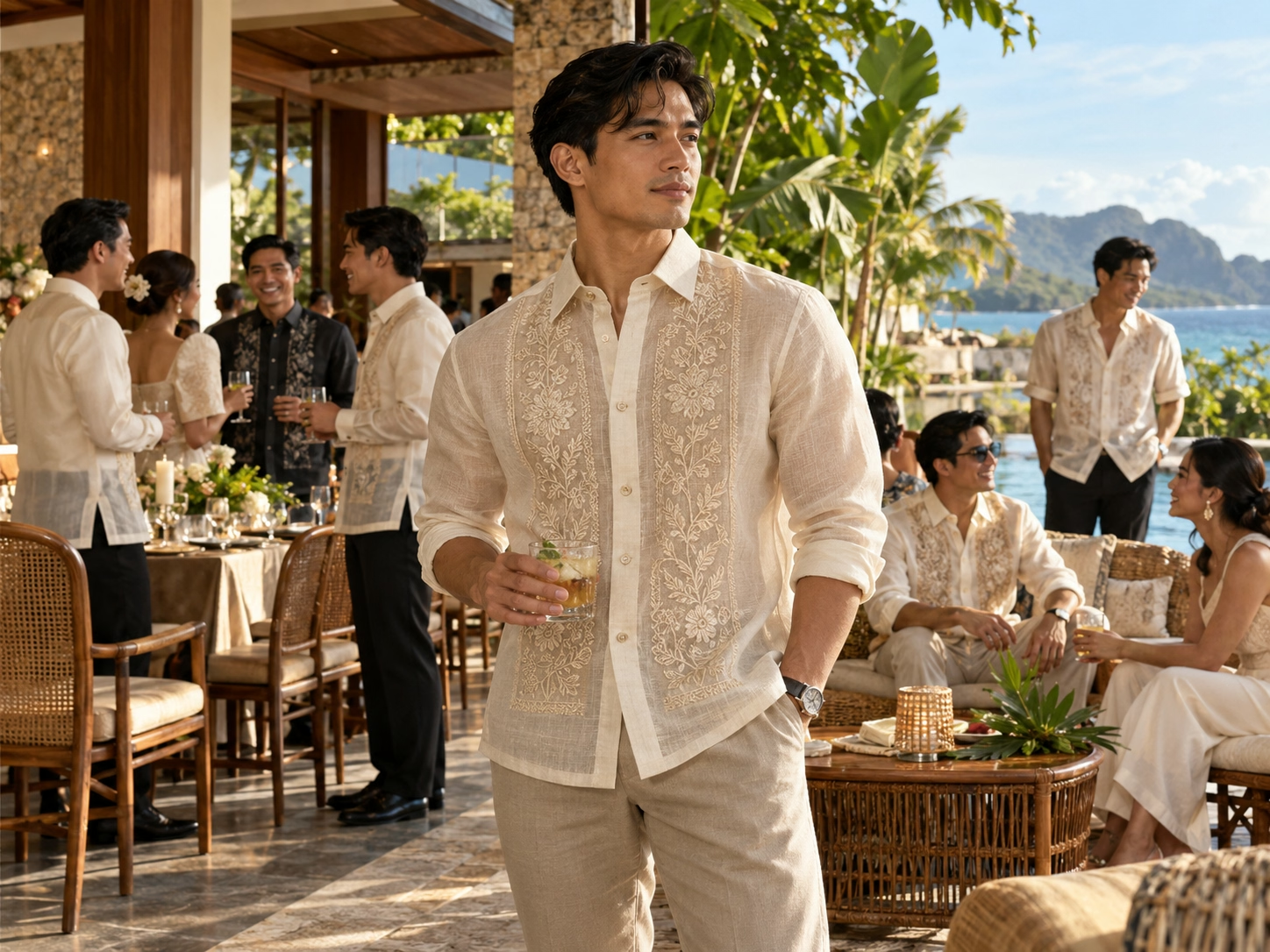
Dressing for work in the Philippines is a daily negotiation between two extremes: the sweltering heat of the commute and the arctic air-conditioning of the office. This tug-of-war has shaped a unique approach to formal and casual wear, one that prioritizes breathability without sacrificing professionalism.
The Climate Challenge
Metro Manila’s rush hour is a sweat-inducing ordeal. Commuters emerge from the MRT or jeepneys into 30-degree heat, only to enter offices set to near-freezing temperatures. As Esquire Philippines notes, this “daily tug-of-war between sweat patches and shivers” demands a wardrobe that can adapt as nimbly as the wearer.
The solution lies in smart fabric choices. Cotton-linen blends, piña-fiber suits, and moisture-wicking synthetics allow professionals to look board-meeting ready while avoiding the dreaded sweat marks. These materials balance formal structure with informal comfort, a principle that JobStreet’s office dressing guide explicitly endorses.
Formal vs. Casual: A Blurring Line
In many Philippine workplaces, the line between formal and casual has become deliberately porous. White-collar workers often default to business casual—collared shirts, slacks, and closed-toe shoes—rather than full suits. Embassy dress codes in Manila, for instance, have relaxed since the pandemic, with button-down shirts and khakis replacing ties for many roles.
For client-facing roles or high-level meetings, a barong tagalog or a lightweight blazer over a dress shirt suffices. Women may opt for conservative blouses, dresses, or slacks, with modern Filipiniana pieces offering a culturally rooted alternative to Western business attire.
The Capsule Wardrobe Approach
Designer Misha Nonoo’s capsule wardrobe philosophy has found fertile ground in the Philippines. A tight rotation of neutrals—navy blazers, charcoal trousers, crisp white button-downs—forms the backbone of a climate-savvy professional closet. This approach reduces morning decision fatigue and ensures that each piece works across multiple settings, from morning meetings to after-work gatherings.
Smart Casual as the New Default
Smart casual has emerged as the pragmatic middle ground. For men, this means dress pants or chinos with a polo or dress shirt. For women, tailored trousers with a blouse or a simple Filipiniana dress work well. Footwear ranges from loafers to dressy sandals, depending on the formality of the setting.
The key is versatility. A linen-rich collared shirt, for example, can stand alone in a casual office or be layered under a blazer for a more formal presentation.
What This Means for Professionals
The Philippine office dress code in 2026 is less about rigid rules and more about situational awareness. Professionals are expected to read the room—and the thermostat—and dress accordingly. Investing in breathable, multi-purpose pieces is not just a style choice; it is a practical strategy for surviving the tropical commute and the air-conditioned boardroom alike.