
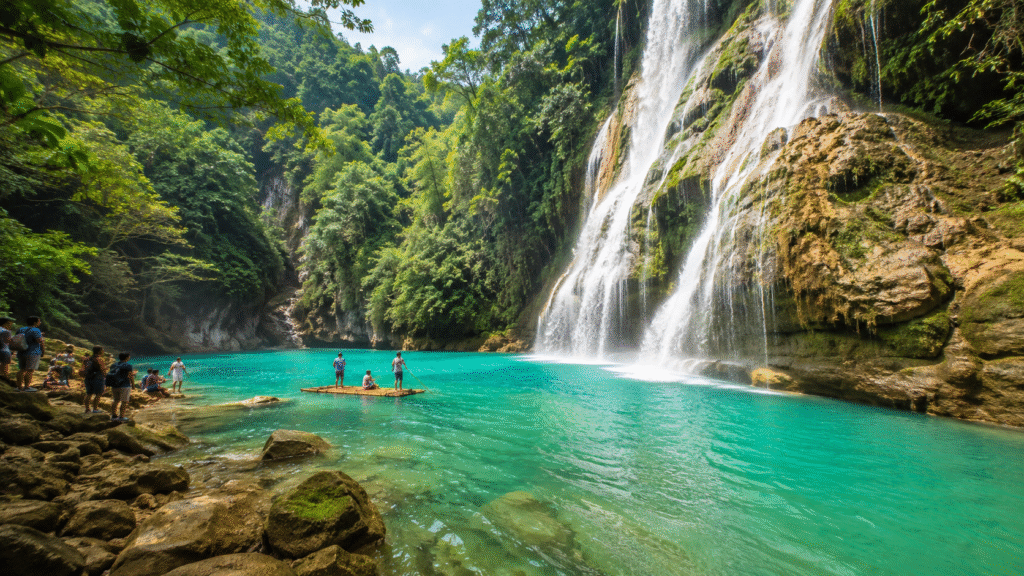
A Different Face of Philippine Tourism
While island-hopping remains the country’s global signature, waterfalls are gaining attention as travelers search for inland adventures and cooler natural escapes. These destinations combine scenery, movement, and local culture. A waterfall trip in the Philippines can include hiking through forests, riding through river canyons, joining a guided canyoneering route, or speaking with local residents whose livelihoods depend on responsible tourism.
Before finalizing a route, travelers should consult official information through the Philippine tourism website at https://philippines.travel/. It helps visitors identify recognized destinations and understand broader tourism themes promoted by the country.
Kawasan Falls: The Cebu Experience That Changed Waterfall Tourism
From Instagram Spot to Managed Adventure Site
Kawasan Falls in Cebu is more than a scenic attraction. It is a case study in how viral tourism can reshape a destination. Known for its electric-blue water, limestone scenery, and canyoneering routes, Kawasan became a must-visit location for both local and foreign travelers.
That popularity brought economic opportunities to Badian but also raised questions about crowding, waste, trail safety, and river protection. Today, visiting Kawasan usually involves more structure than before. Guides, helmets, life vests, and designated routes are part of the experience. This shift reflects a wider trend across the Philippines: nature destinations are being treated less as open playgrounds and more as protected community assets.
Waterfalls That Show the Country’s Geographic Diversity
Pagsanjan Falls in Laguna
Pagsanjan Falls remains one of the most accessible waterfall adventures from Metro Manila. The famous boat ride through a narrow gorge gives visitors an old-school travel experience that still feels cinematic. For many domestic tourists, it is a weekend alternative to beaches and shopping districts.
Tinuy-an Falls in Surigao del Sur
Tinuy-an Falls offers scale and drama. Its broad drop makes it one of Mindanao’s most impressive natural landmarks. Unlike smaller waterfalls hidden in narrow ravines, Tinuy-an feels open and grand, especially when mist rises above the basin.
Asik-Asik Falls in North Cotabato
Asik-Asik stands out for its unusual formation. Instead of water falling from a visible river, streams emerge through a green wall of plants and rock. The visual effect is delicate, almost like a living curtain.
Tinago Falls in Iligan
Tinago Falls, whose name means “hidden,” rewards visitors with a deep basin surrounded by lush cliffs. Its setting gives it a dramatic, enclosed atmosphere that appeals to photographers and nature lovers.
What Travelers Should Know Before Visiting
Waterfall travel in the Philippines requires flexibility. Heavy rain can make some sites dangerous, while dry spells may reduce flow. Local governments may temporarily restrict access for rehabilitation, safety checks, or weather-related risks. This is why checking current advisories is not optional.
Visitors should also treat these places as living ecosystems. Avoid loud behavior, follow guide instructions, support local vendors, and do not swim in restricted areas. The best waterfall trip is not only beautiful; it also leaves the site intact for the next visitor.