
Spanish Colonial Roots and the Rise of Maria Clara
Filipino wedding fashion did not arrive at today’s minimalist terno and pastel barong overnight. It is a visual timeline shaped by Spanish colonialism, nationalism, and now a 2026 emphasis on personal identity. In the 19th century, the mestiza dress evolved into what we now call the Maria Clara: a long saya, a high-necked bodice, and a triangular pañuelo covering the chest. The fabrics were often piña or jusi, and the silhouette followed Victorian modesty. As documented by the National Commission for Culture and the Arts’ Barong Tagalog culture profile, Spanish sumptuary laws and church dress codes influenced how Filipinos presented themselves in public and at rites like weddings.
Piña, Panuelo, and Victorian Influence
Piña was prized for its luster and softness. A bride’s panuelo could be embroidered with floral patterns that signified her family’s region. These garments were not just clothing; they were portable markers of social status and skill. The labor behind piña also meant that a wedding ensemble could take months to complete, turning it into an heirloom before the first photograph was taken.
Mid-Century Terno and Nationalist Pride
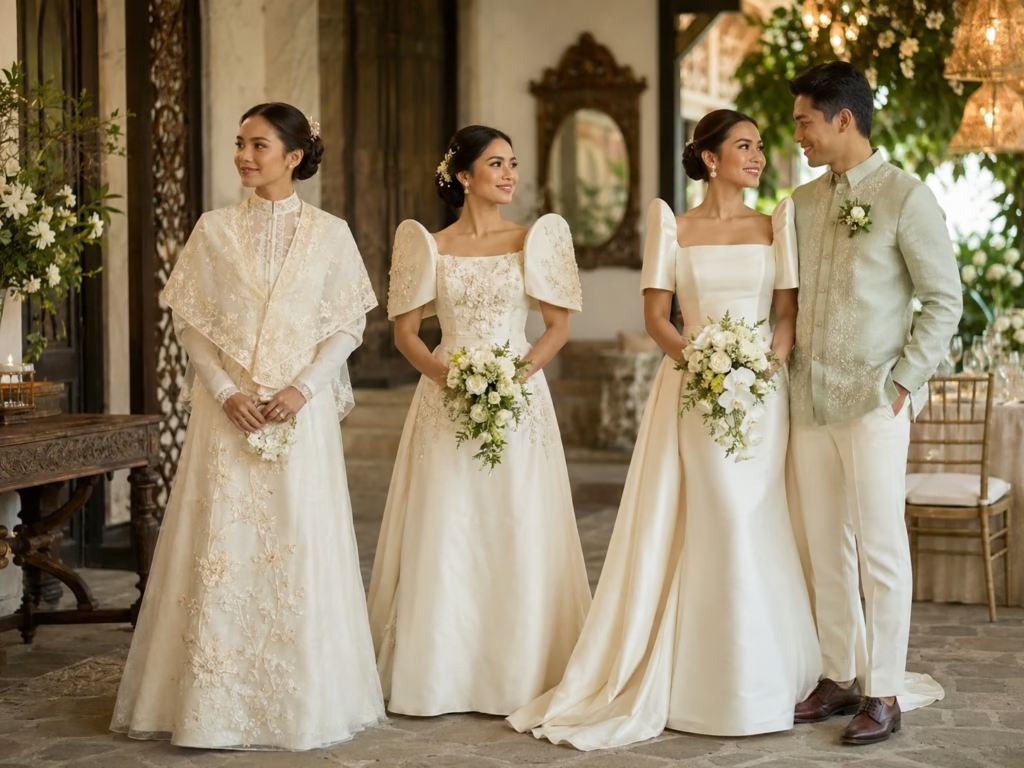
After World War II, the terno became a canvas for national identity. Designer Ramon Valera is often credited with freeing the terno from its Spanish-era accessories, creating a more streamlined gown with dramatic butterfly sleeves. The sleeves grew bolder, and the gown became a statement of Filipino modernity.
The Butterfly Sleeve as Political Statement
In the mid-20th century, first ladies and society women wore ternos at state events, reinforcing the silhouette as elite and patriotic. The butterfly sleeve—once a practical colonial-era design—became an emblem of independence. For weddings, this meant brides could choose between a nostalgic Maria Clara or a sleeker, more contemporary terno.
The 2026 Runway and Real Weddings
Today’s Filipino bridal fashion is far more fluid. At 2026 bridal fairs in Manila and Cebu, designers are showing minimalist silk ternos with sculpted sleeves, detachable trains, and separates that allow a bride to move from church to reception with ease. Men’s wear has expanded beyond the classic white barong to include black, sage, and textured jusi with subtle embroidery. Couples are also borrowing from pre-colonial styles—like the kimona and tapis—for beach and garden ceremonies. This blend of periods allows each wedding to become a curated exhibition of Filipino design history.