
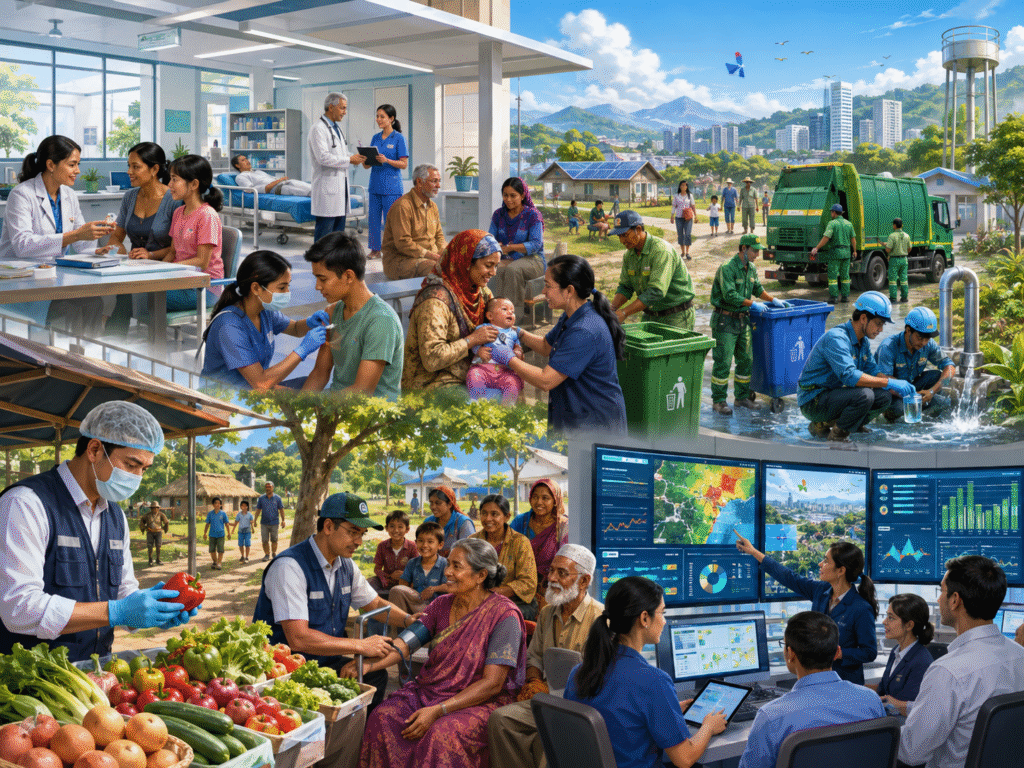
Public health challenges are among the most important issues faced by any country. These challenges include infectious diseases, poor nutrition, mental health problems, pollution, unsafe drinking water, limited medical access, and the growing burden of chronic illnesses. Since public health problems affect large groups of people, the government must take an active role in managing them. A strong public health system depends on government planning, funding, regulation, and public cooperation.
The first responsibility of the government is to build a clear health policy framework. Policies help guide how health services are delivered, how diseases are controlled, and how risks are reduced. For instance, the government can establish standards for hospitals, medicine distribution, sanitation, food production, and workplace safety. These rules are necessary to protect citizens from preventable harm. When regulations are weak, public health risks can spread more easily and affect vulnerable communities.
Providing affordable and accessible healthcare is another major duty. Many people cannot pay for private medical treatment, especially those living in poor, remote, or densely populated areas. For this reason, governments must support public clinics, hospitals, health insurance programs, mobile health services, and community-based care. Access to healthcare should not depend only on income or location. When people can receive treatment early, diseases are easier to manage and healthcare costs can be reduced.
The government must also focus on prevention. Preventive health programs are important because they stop diseases before they become severe. Immunization, health education, clean water programs, family planning, nutrition support, and regular health checks are examples of preventive actions. These programs can reduce child mortality, control infectious diseases, and prevent long-term illnesses. A population that understands hygiene, balanced diets, exercise, and early medical care is more likely to stay healthy.
Another important role is public health surveillance. Governments need reliable systems to collect and analyze health data. Through surveillance, authorities can detect disease outbreaks, identify high-risk areas, and respond quickly. For example, when cases of a contagious disease increase, the government can alert health workers, prepare medical facilities, and inform the public. Without accurate data, responses may be slow or ineffective.
Public health is also closely connected to the environment. The government must ensure that people live in safe and clean surroundings. Waste disposal, pollution control, access to toilets, drainage systems, and clean water supply are all part of public health protection. Poor environmental management can lead to diarrhea, respiratory illness, skin infections, and vector-borne diseases. Therefore, environmental policy and health policy must work together.
Health education is another area where government involvement is essential. People need correct information about disease prevention, nutrition, reproductive health, mental health, and the dangers of harmful habits such as smoking or drug abuse. Public campaigns through schools, media, community centers, and digital platforms can influence behavior. However, education must be simple, accurate, and culturally appropriate so that people can understand and apply it.
To deal with public health problems effectively, the government must cooperate with communities, private organizations, schools, and international institutions. Public health cannot succeed through government action alone. Citizens also need to participate by following health guidelines, maintaining hygiene, using health services responsibly, and supporting community programs. With strong leadership and community involvement, public health problems can be reduced in a sustainable way.