
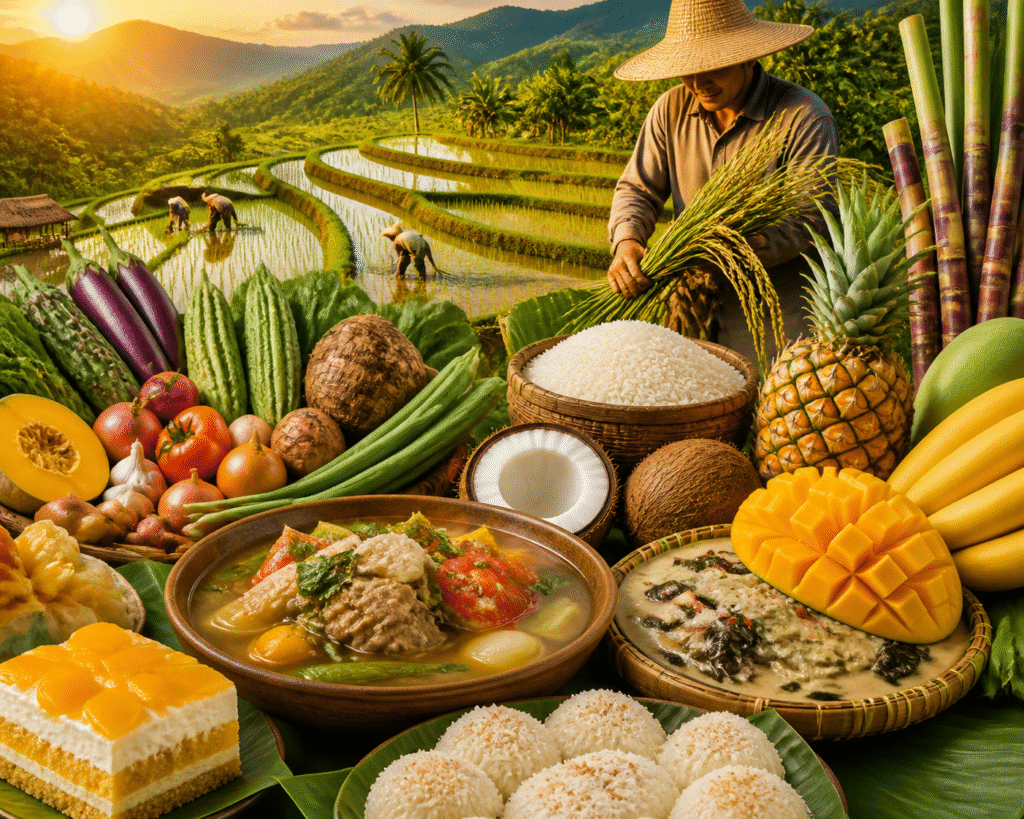
The Philippines’ culinary culture is a beautiful reflection of its agrarian roots, with local farmers playing an integral part in the creation of the country’s dishes. Filipino cuisine is defined by the abundance of ingredients derived from its fertile soil, and much of its distinctive flavors and regional variations can be attributed to the hands of local farmers who cultivate and harvest these essential crops.
Rice, a central element in Filipino meals, is the primary food source for many Filipinos and is at the heart of the nation’s agriculture. Across the country, farmers continue to grow varieties of rice that are unique to different regions, such as the fragrant “sinandomeng” rice or the famous “black rice” cultivated in the mountainous regions of Northern Luzon. The history of rice farming in the Philippines is deeply embedded in the culture, with practices passed down through generations. The famed Banaue rice terraces stand as a testament to the sophisticated methods of farming practiced by Filipinos for over 2,000 years.
Vegetables are another crucial element in Filipino cuisine, and they are often incorporated into various dishes to add depth and health benefits. The Philippines has a diverse range of vegetables, from leafy greens such as malunggay (moringa) and kangkong to root vegetables like camote (sweet potato) and gabi (taro). These ingredients form the foundation of many Filipino dishes, including “sinigang,” a sour soup that includes vegetables and meats. The availability and freshness of these local ingredients depend largely on the work of farmers who grow them sustainably, ensuring that they are available in markets for both home cooks and restaurants.
Tropical fruits, another vital part of Filipino cuisine, owe much of their availability to the country’s agricultural labor. Mangoes from Guimaras, pineapples from Bukidnon, and bananas from Mindanao are some of the most famous fruits in the Philippines. These fruits are often used in both savory and sweet dishes, from desserts like “mango float” to main courses like “sinigang na baboy” with pineapple. Local farmers harvest these fruits throughout the year, and their contributions are celebrated in the culinary practices of Filipino families.
In addition to contributing ingredients, Filipino farmers also engage in the production of various processed goods that are essential in Filipino kitchens. For example, coconut farmers are the primary source of coconut oil, coconut milk, and other coconut-based products that are staples in many Filipino recipes. Likewise, sugarcane farmers contribute to the production of sugar, a key ingredient in both savory and sweet dishes.
Local farmers also play a significant role in the development of the farm-to-table movement in the Philippines, which emphasizes the importance of eating fresh, locally sourced food. Many Filipino chefs and restaurants are now focusing on sourcing ingredients directly from farmers, supporting local agriculture, and reducing the environmental impact of food transportation. This movement not only helps preserve Filipino culinary traditions but also provides a direct connection between the land and the dishes that represent Filipino culture.
Filipino cuisine is a testament to the resourcefulness and creativity of its people, with farmers at the core of this culinary heritage. Through their hard work, dedication, and expertise, Filipino farmers continue to contribute to the country’s gastronomic traditions, ensuring that Filipino food remains a vibrant and dynamic part of the global culinary scene.