
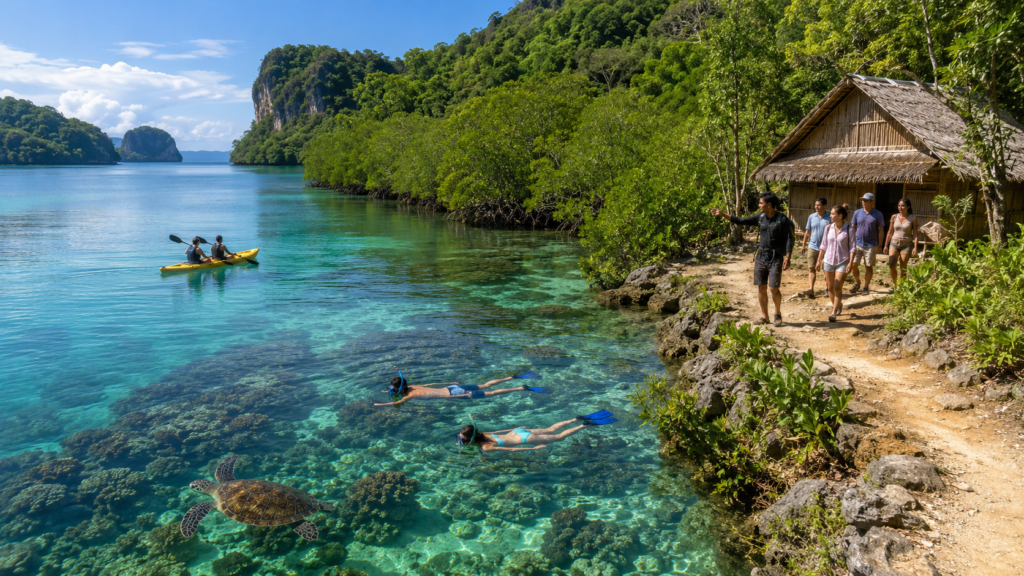
With thousands of islands, the Philippines is one of Asia’s most important marine tourism destinations. Its tropical waters contain coral gardens, deep reef walls, seagrass beds, mangrove forests, sea turtles, sharks, rays, and hundreds of reef-fish species.
However, one of the country’s greatest attractions is also one of its most fragile natural assets. Coral reefs face growing pressure from rising sea temperatures, illegal fishing, coastal development, sedimentation, pollution, and irresponsible tourism.
Marine ecotourism has therefore become more than a specialized travel trend. It is increasingly viewed as part of the country’s wider conservation strategy.
Tubbataha Reefs Natural Park is a leading example of this model. Its official management website provides information about conservation programs, diving regulations, and park protection at https://tubbatahareefs.org/.
How Responsible Diving Can Finance Conservation
In well-managed marine destinations, diving fees are not simply entrance charges. They may help finance ranger stations, patrol boats, mooring buoys, marine research, scientific monitoring, and environmental education.
This system gives coral reefs measurable economic value without extracting fish, coral, shells, or other marine resources.
Tubbataha demonstrates how limited access can protect a high-value ecosystem. Diving is seasonal, visitor activities are regulated, and strict rules help reduce direct human impact.
Its tourism model shows that exclusivity should not only be associated with luxury. Limited access can also be an important conservation strategy.
Scuba Diving in Protected Areas
Responsible scuba diving allows visitors to observe coral walls, reef sharks, sea turtles, rays, and diverse reef fish while following strict environmental standards.
Professional operators require proper buoyancy control, prohibit touching marine life, and use designated mooring systems instead of dropping anchors on coral reefs.
Divers should also avoid collecting shells, feeding wildlife, or using equipment in ways that disturb the seabed.
Snorkeling With Community Guides
In destinations such as Palawan, Bohol, and Negros Oriental, snorkeling can support coastal communities when activities are properly managed.
Local guides can identify marine species, explain reef behavior, monitor visitor conduct, and prevent tourists from entering fragile coral areas. Community-guided tours may also keep a larger share of tourism income within coastal villages.
Mangrove and Seagrass Experiences
Marine ecotourism is not limited to coral reefs. Mangroves and seagrass meadows are essential parts of coastal ecosystems.
Mangroves protect shorelines from erosion and storm surges, while seagrass beds provide feeding and nursery areas for fish, turtles, and other marine animals.
Kayaking through mangrove channels or joining a coastal education tour can help visitors understand how reefs, mangroves, and seagrass habitats are ecologically connected.
When Tourism Becomes a Threat
The same visitors who finance conservation can also damage reefs when rules are ignored.
Standing on coral, chasing turtles, dropping anchors, leaving plastic waste, or crowding marine animals can cause long-term environmental harm. This is why enforcement and visitor education are as important as destination marketing.
The Philippines has already experienced how rapidly tourism pressure can overwhelm island communities. The lesson is clear: marine tourism must be planned before visitor numbers peak, not after environmental damage becomes visible.
How to Select a Responsible Marine Operator
A responsible marine tour should offer small groups, trained guides, clear wildlife rules, waste-reduction policies, and transparent environmental fees.
Travelers should ask whether operators follow protected-area regulations, use mooring buoys, provide safety briefings, and explain how conservation fees are spent.
Experiences that feed wildlife to guarantee sightings should be avoided. Natural encounters may be less predictable, but they are more ethical and environmentally responsible.
For coastal communities, healthy reefs support tourism income, food security, fisheries, and protection from strong waves. When travelers select conservation-minded operators, they reward the people and institutions working to keep Philippine marine ecosystems alive.