
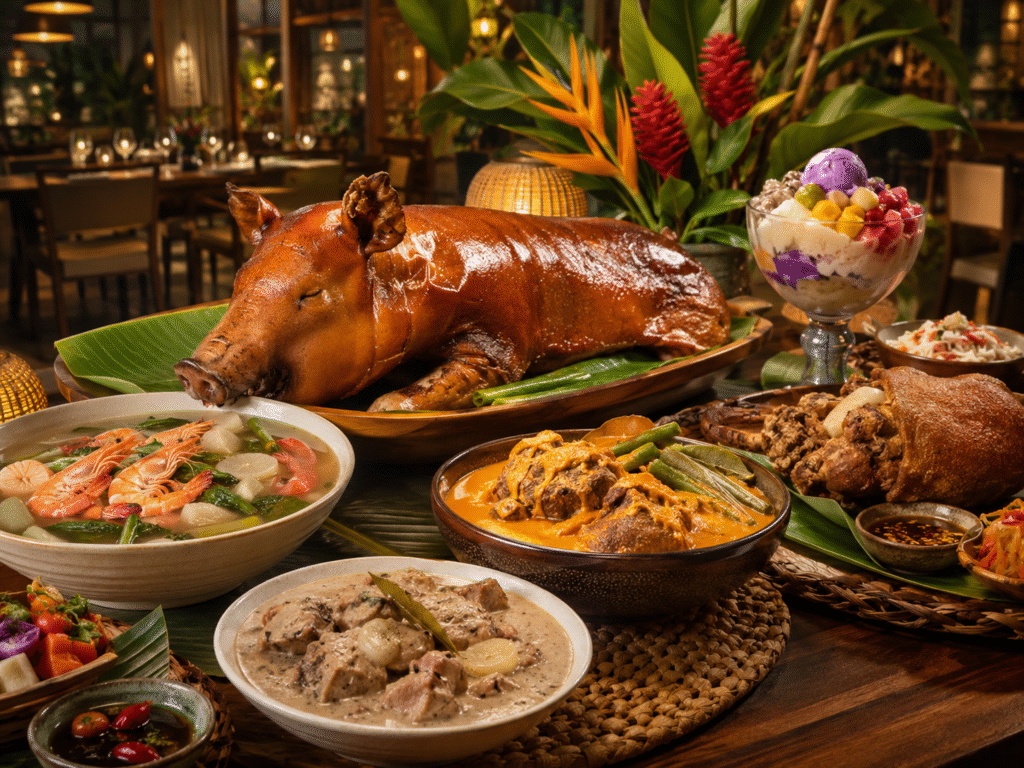
The Philippines is a treasure trove for culinary enthusiasts. Its food scene is as diverse as its culture, offering a fusion of indigenous flavors with Spanish, Chinese, and American influences. For travelers seeking an authentic taste of the nation, visiting some of the country’s most famous restaurants is a gateway to understanding Filipino traditions and gastronomy.
A legendary destination is Rico’s Lechon in Cebu, widely regarded as the benchmark for roasted pig, locally called lechon. What makes this restaurant iconic is its dedication to perfecting the traditional method: whole pigs are roasted over charcoal for hours, producing a golden, crisp skin with tender, juicy meat inside. Served with a savory liver-based sauce, lechon at Rico’s offers more than flavor—it’s a cultural ritual, often associated with Filipino celebrations and communal gatherings.
Another standout is Antonio’s, located in the scenic Tagaytay highlands. This fine-dining establishment brings a modern interpretation to classic Filipino dishes. Signature items like sinigang na hipon (shrimp in sour tamarind broth) or braised short ribs demonstrate the chef’s skill in balancing traditional flavors with contemporary presentation. The restaurant’s elegant setting, paired with an extensive wine list, transforms dining into a complete sensory experience, appealing to both local patrons and international visitors.
For those seeking creative twists on street food favorites, Mesa Filipino Moderne is a must. With branches in Manila and Cebu, Mesa elevates comfort foods to gourmet standards. Dishes like adobo sa gata (pork or chicken in coconut milk) and kare-kare (oxtail stew with peanut sauce) highlight traditional Filipino flavors while catering to modern tastes. Its menu also includes seafood and vegetarian options, making it versatile for different dietary needs. The contemporary ambiance complements the inventive cuisine, creating a memorable dining experience.
Lanai Restaurant in Manila offers a more casual yet equally authentic approach. Renowned for traditional Filipino comfort dishes and seafood specialties, Lanai delights patrons with items like crispy pata (deep-fried pork knuckles) and halo-halo, a layered dessert combining shaved ice, beans, and sweet fruits. The restaurant emphasizes fresh, locally sourced ingredients, which ensures each dish not only tastes authentic but also celebrates the Philippines’ rich culinary heritage.
These restaurants represent more than just meals—they are cultural landmarks. Filipino cuisine emphasizes communal dining, and these establishments preserve that spirit, welcoming visitors to experience the warmth and hospitality inherent to Filipino culture. They also showcase the country’s culinary diversity, from sour and tangy dishes to rich and hearty specialties, providing a well-rounded introduction for first-time diners and seasoned food lovers alike.
Experiencing Filipino food at these renowned restaurants offers a window into the nation’s soul. Whether enjoying the succulent lechon in Cebu, the refined dining at Antonio’s, the modern interpretations at Mesa, or the comforting classics at Lanai, each venue allows guests to savor not just the flavors but also the stories, traditions, and passion that define Filipino cuisine.