
A Nation Embraces Its Spiritual Heritage
When the Black Nazarene procession wound through the streets of Manila in January 2026, an estimated 9.6 million devotees participated—surpassing the previous year’s 8.1 million and cementing its status as one of Asia’s largest religious gatherings. This extraordinary turnout is not an anomaly but a reflection of a broader trend: faith tourism in the Philippines is experiencing unprecedented growth, transforming centuries-old churches into economic engines for local communities.
The statistics tell a compelling story. During Holy Week 2026, the province of Bulacan alone welcomed 1,958,287 pilgrims and travelers, with 192,693 overnight visitors and 1,765,594 same-day travelers. These numbers represent more than spiritual devotion; they signify a significant economic force that is reshaping how local governments approach heritage preservation and tourism development.
The Bulacan Model: Where Faith Meets Economic Opportunity
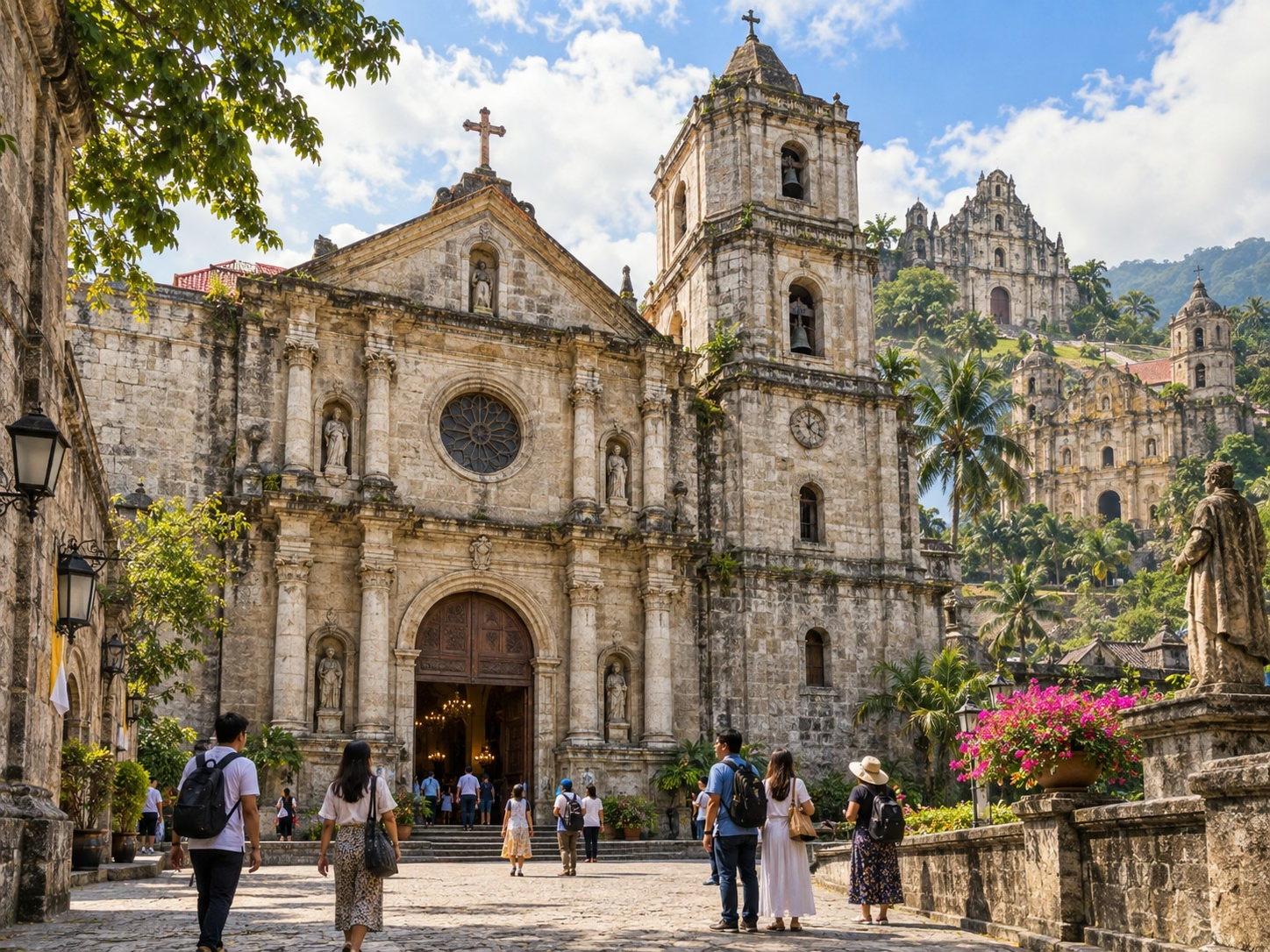
Bulacan has emerged as a case study in how faith tourism can drive cultural growth and economic development. Among the province’s most prominent attractions is the San Miguel Church, a 300-year-old diocesan shrine dedicated to San Miguel the Archangel, which draws visitors not only for its spiritual significance but also for its architectural grandeur. The influx of pilgrims has stimulated local businesses, from food vendors to transportation services, creating a symbiotic relationship between heritage conservation and community livelihood.
The Department of Tourism has taken notice. In August 2026, DOT-Bicol Director Herbie Aguas emphasized that “faith tourism is very important and is one of the attractions that draws many visitors,” citing the annual Peñafrancia celebrations in Camarines Sur and the Our Lady of Salvation in Joroan, Tiwi, Albay. The newly opened “Pagsalingoy” exhibit at the Museo de Legazpi, which documents the history of the Diocese of Legazpi, represents a strategic effort to extend faith tourism beyond traditional pilgrimage seasons and into year-round cultural engagement.
Leyte and Southern Leyte: The Pilgrimage Circuit of the Visayas
While Luzon often dominates discussions of Philippine religious heritage, the Visayas region is carving out its own distinctive pilgrimage identity. In Leyte and Southern Leyte, tour operator Maria Rochelle Alfonso initiated the “Sinugdan Pilgrimage,” a journey of faith covering eight historic churches that are not only architectural landmarks but places of deep spiritual meaning.
Among these are the St. John the Baptist Catholic Church in San Juan, Southern Leyte; the Sto. Niño de Malitbog Church; and the Diocesan Shrine of Our Lady of the Assumption in Maasin City. Pilgrims traveling in groups or as families spend their journeys in prayer, attending Mass and participating in traditional devotional practices, while tour guides highlight the churches’ history, artworks, and architectural features. Local tourism offices note that this tradition has been passed down through generations, evolving into a sustainable form of faith tourism that blends religious devotion with cultural heritage.
The Strategic Shift Toward Year-Round Religious Travel
A key development in 2026 is the move toward permanent, year-round faith tourism infrastructure. In Cebu City, Mayor Nestor Archival announced plans to expand heritage tours into a regular program, integrating a faith-based component in collaboration with the Archdiocese of Cebu. Two electric buses have been prepared as regular tour vehicles, and the initiative aims to showcase not only the Basilica Minore del Santo Niño and the Cebu Metropolitan Cathedral but also historic churches across the entire province.
This strategic shift reflects a broader recognition that religious tourism is not confined to Holy Week or Christmas. The Philippine Information Agency has documented how pilgrims now visit historic churches months ahead of Holy Week, combining spiritual devotion with cultural and heritage tourism as travel activity increases in religious destinations.
The Road Ahead
The convergence of faith and tourism in the Philippines represents more than an economic opportunity; it is a testament to the enduring role of religion in Filipino identity. As infrastructure improves and promotional efforts intensify, the country is poised to become a global leader in faith-based travel. For local communities, the challenge lies in balancing commercialization with the preservation of the sacred character that makes these sites meaningful in the first place. The success of this balance will determine whether the Philippines’ faith tourism boom becomes a sustainable legacy or a fleeting phenomenon.