
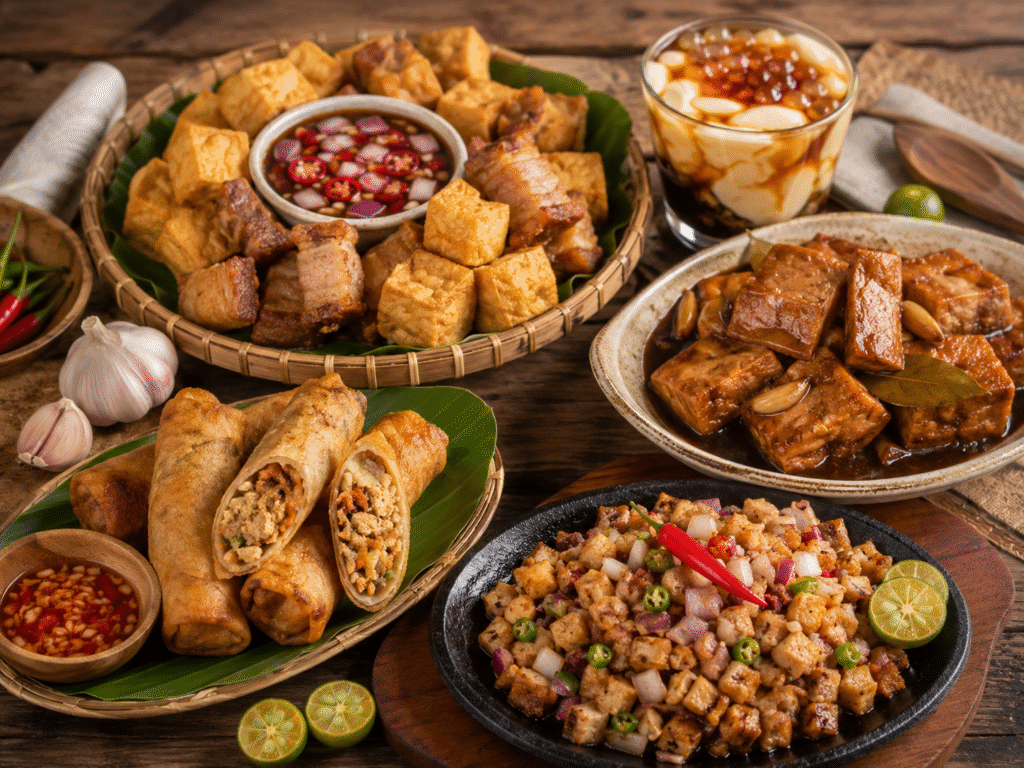
Tofu has become a familiar and useful ingredient in many Filipino households. Known locally as tokwa, it is valued for its mild taste, soft interior, and ability to absorb sauces and seasonings. Its presence in the Philippines reflects the influence of Chinese cuisine, but over time, Filipino cooks have transformed tofu into dishes that match local preferences for sour, salty, sweet, and spicy flavors.
A classic example is Tokwa’t Baboy, one of the most recognized tofu dishes in the country. This food combines fried tofu with pork, usually pork belly, pork ears, or other boiled pork cuts. The tofu is cut into cubes and deep-fried until golden and crisp. The pork adds richness, while the sauce brings balance. The usual dressing is made with vinegar, soy sauce, onions, garlic, black pepper, and chili. Because of its sharp and savory flavor, Tokwa’t Baboy is often served with rice porridge or eaten as a bar snack.
Tofu also appears in one of the Philippines’ most nostalgic street foods: Taho. This sweet snack is made with very soft silken tofu, warm brown sugar syrup, and small tapioca pearls called sago. Vendors traditionally sell taho in the early morning, walking through streets and calling loudly to attract buyers. For many Filipinos, taho is connected to childhood memories and simple morning routines. Its flavor is gentle and sweet, while its texture is smooth and comforting.
Another important tofu dish is Adobong Tokwa. Adobo is one of the most famous Filipino cooking methods, using vinegar, soy sauce, garlic, bay leaves, and peppercorns. When tofu is used instead of meat, it becomes a practical and flavorful dish for people who want a lighter meal. The tofu is usually fried before being simmered in the sauce so it does not break apart easily. As it cooks, it soaks up the adobo mixture and becomes rich, salty, sour, and aromatic.
In recent years, Tofu Sisig has gained popularity as a creative version of pork sisig. Traditional sisig is known for its chopped meat, citrus flavor, onions, chili, and sizzling presentation. The tofu version keeps the exciting flavors but replaces the meat with fried tofu. Some recipes add mayonnaise for creaminess, while others include egg, green chili, or calamansi. It is commonly served hot and is enjoyed with rice or as a dish for sharing.
Tofu is also used in Filipino vegetable rolls, often called Lumpiang Tokwa or tofu lumpia. These spring rolls may include shredded vegetables, tofu pieces, garlic, onion, and seasoning. Once wrapped and fried, they become crunchy outside and flavorful inside. They are usually dipped in vinegar, garlic sauce, or sweet chili sauce.
What makes tofu special in Filipino cuisine is its versatility. It can be sweet, crispy, saucy, spicy, or light depending on how it is prepared. From taho sold on the streets to sizzling tofu sisig in restaurants, Filipino tofu dishes prove that a humble ingredient can become deeply flavorful and culturally meaningful.